




Product Description
The economics: on any graphic that gets hit more than once, the laminate costs less than the reprint. Transit shelters, utility cabinets, parking structures, school and municipal signage, station wayfinding, and street-level retail are where this pays for itself fastest.
Why specify 850RW
Technical data
| Film | High-gloss polyester, PVC-free |
|---|---|
| Finish | High gloss |
| Thickness | 20 micron (approx. 0.8 mil) |
| Adhesive | Solvent-based, clear, UV-stabilised |
| Liner | Clear polyester |
| UV stabilisation | Present in both film and adhesive |
| Graffiti resistance | Very high resistance to graffiti and chemicals |
| External weathering | 5 years |
| Suitable for | Internal and external applications |
| Lamination | Cold lamination |
| Roll size | 54" x 50 yd |
| Manufacturer | Metamark, manufactured in the UK |
Figures are manufacturer typical values, not specifications. Confirm suitability for your ink set and substrate with a test panel before production. Full Metamark technical datasheet and cleaning guidance available on request — email Sales@kgsupplies.com.
850RW vs. MetaGuard 850 — which one
| MetaGuard 850RW | MetaGuard 850 | |
|---|---|---|
| Film | 20 micron polyester | 50 micron PVDF |
| Protection level | Very high | Maximum |
| Profile | Thin, low-bulk | Heavier, more robust |
| Surfaces | Flat panels and signage | Flat or slightly curved |
| Choose it when | You need anti-graffiti protection across a lot of square footage without adding bulk or cost | The asset is high-value, hard to re-service, or faces the worst abuse and chemical exposure |
If you're protecting a fleet of transit shelters or a run of municipal panels, 850RW is usually the right call on cost per square foot. If it's a single high-exposure installation you won't get back to for years, step up to the 850.
Applications
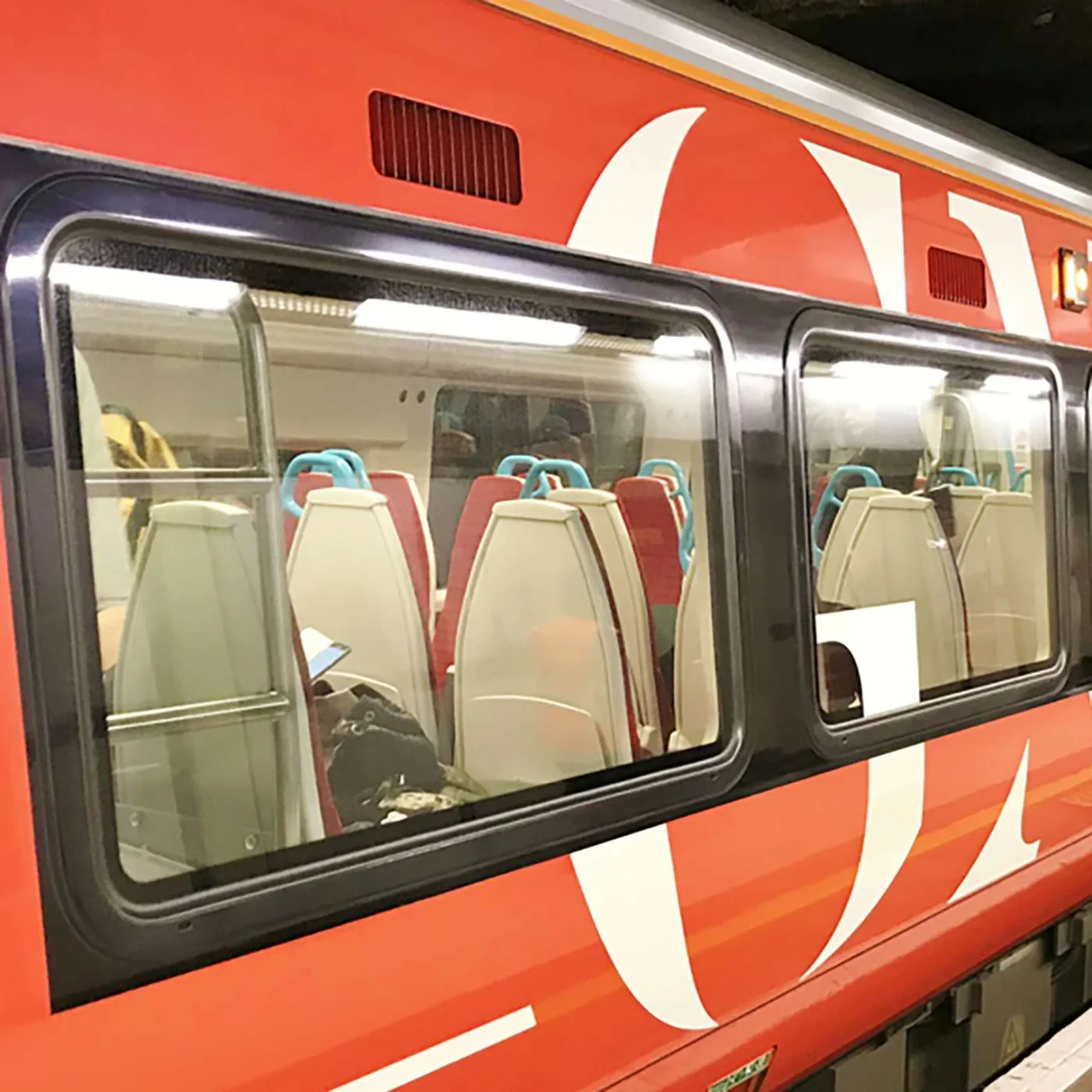
- Transit shelters, bus and rail interior/exterior graphics
- Station wayfinding and platform signage
- Utility cabinets, electrical boxes, and street furniture
- Parking structures and stairwell signage
- School, campus, and municipal facility signage
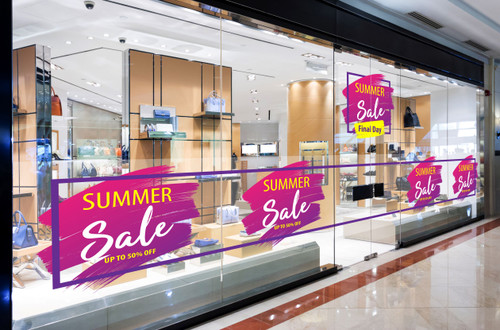
- Street-level retail graphics and exposed storefront panels
- Any printed graphic in an unsupervised public location
Lamination notes
- Let prints outgas first. Solvent and eco-solvent prints need to cure fully before lamination or trapped solvent will cause hazing and adhesion failure down the line.
- Cold laminate, moderate pressure. Run a test strip and dial in nip pressure — a thin polyester laminate will telegraph roller marks if you overdo it.
- Clean environment. At 20 micron, every dust particle under the film shows on a high-gloss face. Laminate in as clean a space as your shop allows.
- Check your cleaning protocol. Anti-graffiti performance depends on the removal solvent and dwell time used in the field. Get Metamark's cleaning guidance to whoever maintains the installation — the laminate only works if the crew cleans it correctly.
- Test your ink set. Verify adhesion over your specific print media and ink before committing a large run.
Pair it with
- Digital print media — build the matched print-and-laminate system underneath.
- All overlaminates — compare against standard UV and abrasion laminates if graffiti isn't the threat.
- Laminators — cold roll laminators sized for 54" work.
- All Metamark products — the rest of the MetaGuard and DigitalVinyl range.
Speccing anti-graffiti for a municipal, transit, or campus contract?
We'll pull the Metamark technical datasheet and cleaning protocol for your submittal, quote volume, and hold stock against a phased install schedule. Overnight delivery across Arizona, Nevada, New Mexico, and Colorado; nationwide UPS everywhere else.
Email Sales@kgsupplies.com or call (602) 272-8655.